

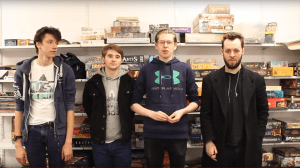
Me, co-presenting our game at the 2019 Brunel Digital Degree show
Since graduating from my Game Design undergraduate course with 1st class Hons in the summer of 2019, I have been employed working in the games industry, initially as a QA Technician and as both a Producer and QA Lead.
Professionally I assist with production planning and the testing of commercial games, seeking for issues, offering specific feedback and suggesting improvements and development strategies. Working on large projects with a cross-disciplinary team presents challenges but incredible opportunities to push for maximum quality.



Some examples of the Credits or Press of games I’ve worked on.
Production Philosophy
These are some of the lessons I have gained from working within production for half a decade:
- No Dogmas – Management Methodologies (e.g. Agile) are most helpful as guidelines and must adapt to suit the right team, project or studio. Where time permits, it is useful to use critical thinking to challenge and question pipelines and approaches to ensure the best practices are being followed, even if non-obvious.
- Good Data Management is the lifeblood of a Strong Schedule – Providing estimates and tracking data can be essential to scheduling a project. But all data tracked on JIRA, spreadsheets or elsewhere should aim to do so for a clear defined goal, in a unified, complete and user-friendly way.
- Communication, Communication, Communication – How-To Guides, Checklists, Documentation, Wiki pages, Bug Reports, Action Plans, etc. All of these require highly comprehensible documentation, that often needs to be rapidly assembled. This is is a key way to ensure shared knowledge across a project, but also purposeful standups, Teams channels, reviews, and other recurring meetings are also essential to keep a good flow of information across individuals and teams.
- Leadership Means Being a Good Follower – Patience is essential in leadership, and needlessly punching down only weakens and divides teams. Leadership grows by listening actively and attentively to their teams and stakeholders, whilst being proactive about identifying and solving issues, and then building out plans that reflect the reality of development.
In my spare time I also work as an independent designer. I make unusual, thematic and narratively resonant games across a variety of engines and genres that offer ways of standing out to the player as a memorable experience. Creatively shaping the systems, stories, worlds, peoples and spaces of a video game is as good as it gets!
For me Production skills are the best way to shape, action and empower Design. Likewise my Design skills and experience help me become a better Producer, simply it helps me understand how games are made and how concepts like elegance, friction, or the MVP can empower design. These two disciplines, in my opinion, naturally go hand in hand.

Playtesting, iterative design and teamwork are core to my work as a Designer
Design Philosophy
As a designer I focus my skills toward:
- Distinct and imaginative narrative/world design – detailed, systematically designed organic secondary worlds with internal thematic coherence and tonal specificity to make something organic and memorable.
- Interesting and surprising gameplay experiences – go beyond the obvious mechanics, capture conceptual delight in the player within seconds, innovation must stay grounded, the player should feel a creative participant, theme isn’t fluff.
- Clear, focused project management & team work – Agile methodologies, pipelines, milestones, iterative design, communication and collaboration are all the lifeblood of collaborative project. Any useful design work must be made to a high-level of specificity and with the schedule and limitations in mind.
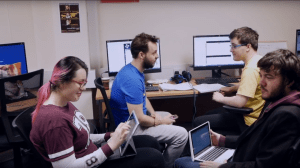
Some examples of the Design teams I’ve worked with throughout my degree.
Other Skills
- Design Documentation: Significant experience in both detailed and concise design documentation that is visually engaging, readable, coherent, layered and imaginative. Examples
- Game Criticism: Ability to write discursively and critically on the design philosophy and academic analysis of video games drawing on inter-disciplinary fields. Examples
- Natural Presenter: Confident speaker having delivered countless pitches across the degree concisely demonstrating game elements, mechanics and appeal. All highly successfully received and graded.
- Industry project management software: JIRA, Confluence, Trello, Roadmaps, Testrail, GSuite, Excel, Scrumwise
- Adaptable applications of management methodologies: Scrum, Agile, Lean
- Game Engines: Unreal, Unity (C#), Clickteam Fusion 2.5, ink, Twine 1, Twine 2, Inform, Bitsy, Construct 2, Game Maker: Studio, Adventure Maker, RPG Maker, Dreams, Little Big Planet
- Asset Creation Software: Photoshop, Illustrator, Gimp, Aseprite, Piskel
- Editing Software: Adobe Premiere Pro, Final Cut Pro, Audacity
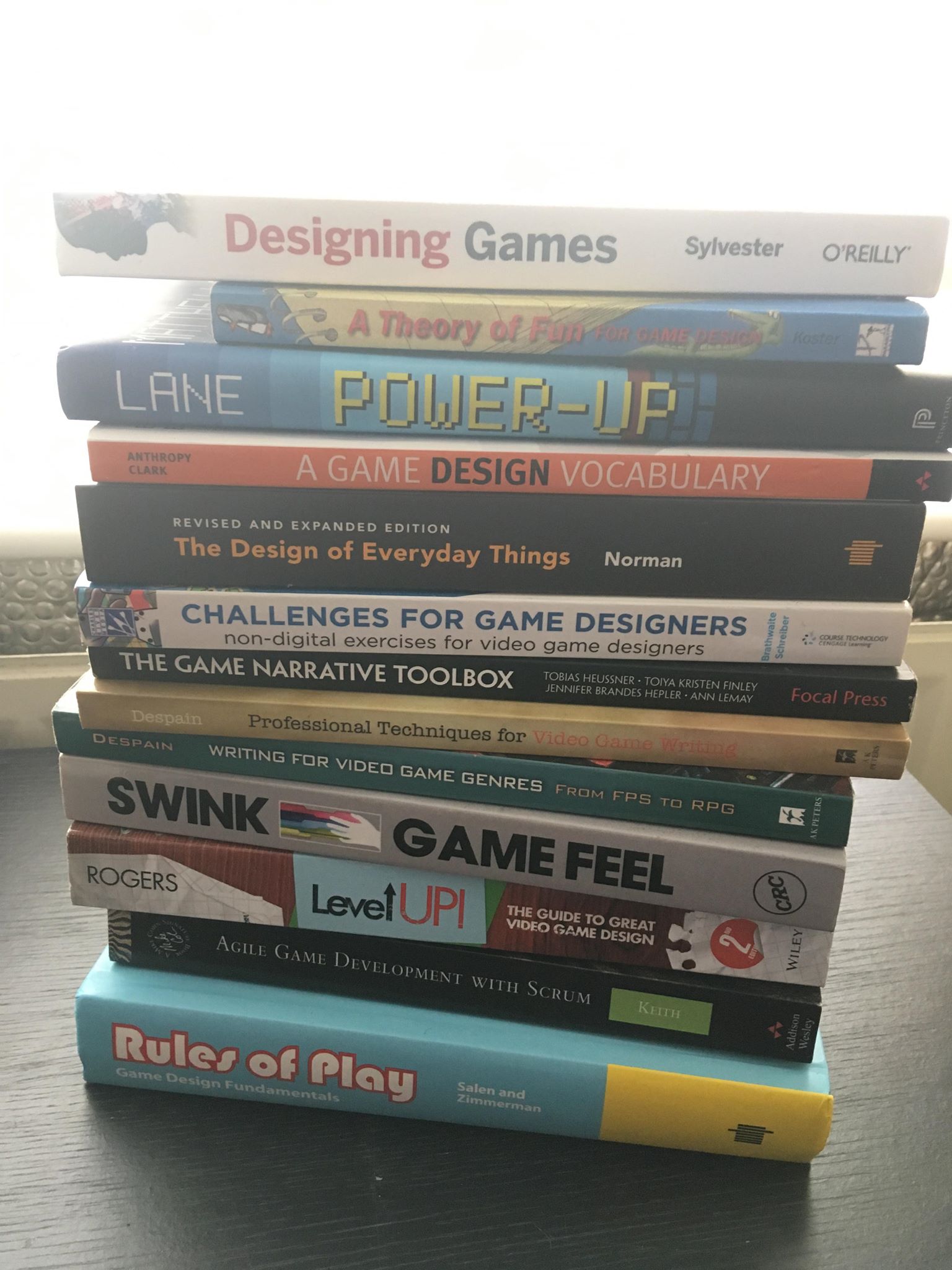 A designer’s role is to be ever learning.
Passion
More broadly, I’m a big believer that game development requires an active mind and passion for things both in and outside of games. Some examples:
- Games – Design Philosophy, Interactive Fiction, Indie Games, Retro Games, Game History & Preservation, Game Based Learning
- Critical Theory & Academia – History, Religion, Mythology, Social Justice, Maths, Physics, Ecology, Psychology
- Art – Cinema, Surrealism, Modernist Art, Outsider Art, Character Design, Stylised Art, Children’s Media, Experimental Music
 James Nowlan Games